
Leave Your Message
Medical cleanrooms, sterile laboratories, and bio-containment facilities represent some of the most sensitive and highly regulated environments in the modern industrial landscape. These specialized zones are explicitly designed to maintain stringent environmental controls, ensuring that microscopic contaminants, particulates, and biological hazards are kept strictly regulated. However, modern pharmaceutical and biological research demands more than just environmental purity; it requires uncompromising physical security. The Forced Entry Resistant Door And Frame For Medical Cleanrooms And Sterile Laboratories serves as the ultimate barrier, seamlessly blending airtight containment with military-grade intrusion prevention.
In today's commercial landscape, the biotechnology and pharmaceutical sectors are experiencing exponential growth. Facilities house invaluable intellectual property, sensitive patient data, controlled substances, and potentially hazardous biological agents. A breach in these environments—whether through forced entry, espionage, or accidental contamination—can result in catastrophic financial losses, severe regulatory penalties, and profound public health risks. Standard commercial doors, even those rated for fire safety, are woefully inadequate against coordinated physical attacks. Consequently, the industrial status quo has shifted towards mandatory implementation of heavy-duty, forced-entry resistant architectural components in all high-tier medical cleanrooms.
Regulatory bodies such as the FDA, DEA, and WHO have continuously updated their guidelines to mandate robust physical security measures. A forced entry resistant door in these settings must withstand prolonged attacks using heavy hand tools, power tools, and even ballistic impacts, all while maintaining the strict pressure differentials required for a sterile cleanroom environment. This dual-requirement—impenetrable security combined with hermetic sealing—has driven unprecedented innovation in the manufacturing of specialized door frames, hinges, and locking mechanisms tailored specifically for the medical sector.
Dujiangyan Jindun Protective Equipment Co., Ltd. is a professional manufacturer of high-security doors and windows. Our premium brand FORTISAFE, dedicated to the global market, is committed to delivering high-quality products and comprehensive services to customers worldwide. As a comprehensive enterprise integrating R&D, manufacturing, sales, and after-sales service, we stand out with cutting-edge fully automated production equipment and intelligent management systems. Supported by over 20 patented technologies, we demonstrate strong technical expertise.
Our extensive product range includes steel doors, wooden doors, medical doors, fire rolling shutters, fire rated windows, fire rated glass, and specialized forced entry resistant doors and windows. Each solution delivers precise and reliable quality to meet your diverse sterile and security needs.


The evolution of the Forced Entry Resistant Door And Frame For Medical Cleanrooms And Sterile Laboratories is deeply intertwined with the rise of smart building technologies and advanced material sciences. The most prominent trend in the industry is the transition from passive physical barriers to active, intelligent security portals. Modern forced entry doors are no longer just heavy pieces of steel; they are highly sophisticated nodes within a facility's broader AI-driven security ecosystem.
To prevent unauthorized access to sterile laboratories, traditional key-and-lock mechanisms have been entirely replaced by AI-integrated biometric systems. Retinal scanners, 3D facial recognition, and dual-authentication protocols are now seamlessly built into the frames of forced entry resistant doors. These systems use artificial intelligence to detect anomalies, such as tailgating or forced entry attempts, instantly triggering facility-wide lockdowns and alerting security personnel. The intelligent frames are equipped with hidden sensors that monitor the door's structural integrity in real-time, detecting vibrations indicative of a mechanical attack.
In a medical cleanroom, a door must not harbor bacteria or particulate matter. Development trends have led to the creation of ultra-smooth, seamless stainless steel surfaces treated with nano-silver or other advanced antimicrobial coatings. The frames are fully welded and polished to eliminate any crevices where microbes could proliferate. Furthermore, the internal cores of these doors utilize proprietary composite materials that provide immense ballistic and impact resistance without adding excessive weight, ensuring that the doors can still be operated swiftly during an emergency or evacuation.
Sterile laboratories operate under strict positive or negative air pressure to prevent cross-contamination. Advanced forced entry doors now feature dynamic pneumatic or magnetic sealing systems. When the door is closed and locked, these seals automatically deploy to create an airtight barrier that exceeds standard cleanroom specifications. This technology ensures that even during a sustained physical attack on the door, the biological integrity of the BSL (Biosafety Level) laboratory is never compromised.
We provide tailored solutions to meet the exact specifications of your medical facilities and sterile laboratories.
Engaging in in-depth communication to fully understand specific needs: dimensions, fire rating, design style, installation environment, and special functional requirements.
Our professional design team creates detailed product drawings showcasing appearance, structural details, material specifications, and installation methods.
Evaluating technical requirements, selecting appropriate materials and processes, and ensuring product performance and compliance with safety standards.
Discussing and finalizing payment methods, typically including a deposit, balance payment, and an agreed-upon payment schedule.
Providing a reasonable delivery schedule based on the production plan and ensuring consistent communication with timely updates on progress.
Entering the production phase with strict adherence to drawings. Multiple quality control inspections ensure that products are defect-free and meet high standards.
The deployment of a Forced Entry Resistant Door And Frame For Medical Cleanrooms And Sterile Laboratories is highly specialized. Different medical and scientific environments face unique threat matrices and regulatory demands, necessitating deeply customized security solutions. Below, we dissect the primary application scenarios where these advanced architectural barriers are absolutely essential.
BSL-3 and BSL-4 laboratories handle the world's most dangerous and exotic biological agents, for which there are often no vaccines or treatments. Security in these zones is a matter of national security. Forced entry resistant doors in these facilities are engineered to withstand extreme physical assaults, including explosive breaches. The frames are deeply anchored into reinforced concrete walls. Beyond physical toughness, these doors must feature absolute hermetic sealing to maintain the required negative pressure. In the event of an external attack or internal containment failure, these doors act as the final, unbreakable line of defense, ensuring that lethal pathogens do not escape into the public domain.
In pharmaceutical manufacturing, the primary risks are corporate espionage, product tampering, and theft of high-value compounds. Cleanrooms where active pharmaceutical ingredients (APIs) are synthesized require doors that comply with strict Current Good Manufacturing Practice (cGMP) regulations while providing robust anti-burglary protection. The forced entry resistant doors used here feature flush designs with no exposed fasteners, preventing the accumulation of dust and facilitating rigorous chemical washdowns. Advanced multi-point locking mechanisms ensure that even if the primary electronic lock is bypassed, the door remains firmly secured to the heavy-duty frame.
Facilities cultivating medical cannabis or storing Schedule I and II controlled substances are prime targets for organized criminal enterprises. Regulatory agencies like the DEA require these facilities to implement security measures akin to bank vaults. Forced entry resistant doors utilized for these sterile storage areas are constructed from heavy-gauge steel with specialized anti-pry frames. They are designed to resist prolonged attacks using crowbars, hydraulic spreaders, and cutting torches. Despite their heavy armor, they are finished with cleanroom-compatible coatings to prevent any contamination of the stored medical products.
In modern hospitals, security threats can arise rapidly, ranging from active shooter situations to the containment of highly infectious patients. Forced entry resistant doors in isolation wards and operating theaters must balance the need for rapid, hands-free access by medical staff with the ability to instantly lock down and withstand physical force. These doors often incorporate specialized nano-silica insulated fire-resistant glass vision panels, allowing staff to monitor patients safely without compromising the physical integrity or sterility of the room.
Discover how our high-security forced entry solutions protect critical infrastructure worldwide.


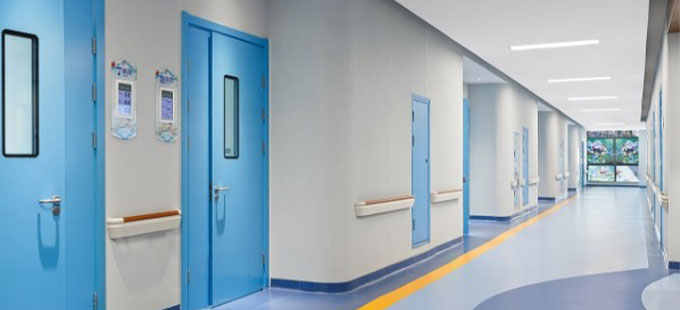


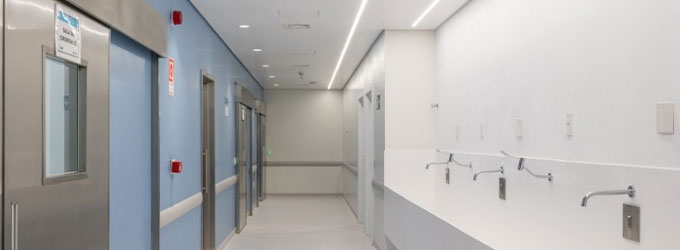


Explore our complete range of specialized doors and windows engineered for maximum security and environmental control.


