
Leave Your Message
Explore our certified steel fire rated door with glass series — engineered for industrial-grade protection and operational visibility.
Power plants and utility rooms represent some of the most fire-sensitive environments in modern industrial infrastructure. High-voltage switchgear, transformer rooms, cable galleries, control rooms, and generator halls all contain materials and systems that are highly susceptible to ignition — and once a fire starts in these environments, the consequences can be catastrophic: equipment loss worth millions, prolonged outages affecting thousands of users, and irreplaceable human casualties.
The steel fire rated door with glass has emerged as the gold standard access solution for these critical environments. Unlike solid steel fire doors, the glass-integrated variant provides a vital operational advantage: personnel can visually inspect conditions on the other side before opening, dramatically reducing the risk of inadvertently exposing staff to fire, smoke, or toxic gases. This single feature has made glass-panel fire doors a preferred specification in power generation facilities worldwide.
The global market for fire rated doors — particularly steel variants with integrated glass — has been experiencing robust growth driven by tightening building codes, expanding power infrastructure, and increased awareness of industrial fire risk. The Asia-Pacific region, led by China, India, and Southeast Asia, accounts for the largest share of demand, fueled by massive investments in nuclear power, thermal power, hydroelectric, and renewable energy facilities.
In China alone, the "14th Five-Year Plan" for energy development calls for the construction and upgrade of hundreds of power generation and transmission facilities. Each of these projects mandates fire-rated door installations in compliance with GB 12955 (steel fire door standards) and GB 50016 (building fire protection code). This regulatory environment has created a sustained, high-volume demand for certified steel fire rated doors with glass panels.
In North America and Europe, NFPA 80, EN 1634, and UL 10C standards govern fire door performance. Utility operators in these regions are increasingly specifying doors with fire-rated glazing panels to balance safety with operational transparency — particularly in unmanned substations and remote utility rooms where visual inspection through the door is the first line of situational awareness before entry.
Next-generation fire rated doors are being equipped with embedded sensors that monitor door status (open/closed/sealed), ambient temperature, and smoke detection in real time. Data is transmitted to building management systems, enabling predictive maintenance and instant emergency response in power plant control rooms.
Ceramic glass and multi-layer fire-rated glass composites now achieve up to 120 minutes of fire resistance (EI120) while maintaining high optical clarity. This has expanded the viable glass area in door panels, improving operator visibility in transformer rooms and cable tunnels significantly.
Power plant environments generate intense electromagnetic fields. Modern steel fire doors now incorporate EMC-shielded frames and hardware, ensuring door operation systems and electronic locks remain functional even in high-EMI environments around high-voltage equipment.
Industrial clients are increasingly demanding fire doors manufactured with recycled steel content and low-VOC coatings. Manufacturers are adopting powder-coating processes and energy-efficient production lines to meet green building certification requirements such as LEED and BREEAM.
Steel fire rated doors in utility rooms are increasingly specified with integrated biometric access control, card readers, and emergency release mechanisms — combining fire compartmentation with strict access management required in critical infrastructure facilities.
Power plant operators require non-standard door sizes to accommodate large cable trays, equipment passages, and blast relief requirements. Factory-level OEM/ODM customization — including oversized frames, special pressure ratings, and custom glass configurations — is now a baseline expectation in the sector.
Understanding the specific environments within power plants and utility facilities reveals why glass-panel fire doors are indispensable — not merely compliant.
These rooms house equipment operating at 10kV–500kV. Fire doors here must provide EI60 or EI90 ratings while allowing operators to visually check for arc flash events or smoke before entry. Steel construction ensures the door itself won't become a conductor or ignition source.
With the rapid expansion of grid-scale battery storage (BESS), these rooms present unique thermal runaway fire risks. Fire rated steel doors with glass panels allow thermal imaging cameras to monitor battery banks through the door, enabling early intervention without breaching fire compartments.
In thermal and hydroelectric plants, turbine halls require compartmentalization to prevent fire spread between generating units. Glass-panel fire doors in corridor access points enable maintenance staff to observe turbine conditions without opening doors, maintaining fire zone integrity.
The control room is the operational brain of any power plant. Fire doors protecting these spaces must meet the highest ratings (EI90–EI120) while providing visual access. Operators inside need to see approaching personnel; visitors need to confirm the room is safe to enter. Glass panels serve both needs simultaneously.
Cable fires in power plants are notoriously difficult to extinguish and spread rapidly. Fire-rated steel doors segment cable galleries into fire zones, limiting damage propagation. Glass panels allow fire teams to assess fire location and intensity before committing to entry — a critical tactical advantage.
Oil-filled transformers present explosive fire risk. Steel fire doors here must withstand not only heat but potential pressure waves. Reinforced steel construction with laminated fire-rated glass provides both blast resistance and visual monitoring capability for these high-consequence spaces.
For power plant and utility room applications, fire resistance ratings of EI60 (60 minutes integrity and insulation) to EI120 are standard. The "EI" classification is critical — it ensures the door not only maintains structural integrity but also limits heat transmission to the unexposed face, protecting personnel and equipment on the safe side.
Industrial-grade steel fire doors feature cold-rolled steel frames (typically 1.5–2.0mm gauge) with internal mineral wool or vermiculite board core materials. The steel construction ensures dimensional stability under heat stress — preventing warping that could compromise the fire seal. Stainless steel variants offer additional corrosion resistance for coastal power plants and chemical utility environments.
Glass panels in steel fire rated doors for power plants are typically specified as multi-layer ceramic glass or fire-rated laminated glass achieving EW30 to EI60 ratings. Panel sizes are engineered to balance visibility requirements with structural integrity — typically ranging from 200×300mm to 600×900mm depending on door size and fire rating requirement.
Intumescent seals around the door perimeter expand under heat to seal gaps and prevent smoke and flame passage. Door closers, panic hardware, and electromagnetic hold-open devices must all be fire-rated components. For power plant applications, hardware is typically specified to withstand temperatures exceeding 200°C without mechanical failure.
Steel fire rated doors with glass for power plants must comply with a matrix of international and regional standards. In China, GB 12955-2008 governs steel fire door construction and testing. European projects require EN 1634-1 testing and CE marking. North American installations specify UL 10C (positive pressure fire test) compliance. For nuclear power facilities, additional seismic and radiation-resistance certifications may be required.
Procurement teams at power generation companies increasingly require third-party certified test reports, not merely manufacturer declarations. Working with manufacturers who maintain active certifications from accredited testing bodies (such as China's CCCF certification or European Notified Bodies) is essential for project compliance and insurance purposes.
Dujiangyan Jindun Protective Equipment Co., Ltd. is a professional manufacturer of doors and windows. Our premium brand FORTISAFE, dedicated to the global market, is committed to delivering high-quality products and comprehensive services to customers worldwide.
Backed by three state-of-the-art manufacturing bases covering a total area of 35,000 square meters, we operate with a skilled team of over 120 professionals and 12 advanced production lines, achieving an annual capacity of 300,000 sets of doors and windows. This large-scale production capability not only ensures efficiency, but also provides our overseas partners with a stable and dependable supply chain.
As a comprehensive enterprise integrating R&D, manufacturing, sales, and after-sales service, we stand out with cutting-edge fully automated production equipment and intelligent management systems. Supported by over 20 patented technologies, we demonstrate strong technical expertise.
Our extensive product range includes steel doors, wooden doors, medical doors, fire rolling shutters, fire rated windows, fire rated glass, and specialized doors and windows. Each solution delivers precise and reliable quality to meet your diverse needs.
Read More About Us


From initial consultation to final delivery, our end-to-end OEM/ODM process ensures your power plant fire door specifications are met with precision.
In-depth communication to fully understand specific needs — door dimensions, fire rating, design style, installation environment, and special functional requirements for power plant applications.
Enquire Now →Our professional design team creates detailed product drawings showcasing appearance design, structural details, material specifications, and installation methods. Revisions welcomed until fully aligned.
Enquire Now →R&D team evaluates technical requirements, selects appropriate materials and processes, and ensures product performance complies with safety standards for industrial environments.
Enquire Now →Flexible payment arrangements including deposit and balance payment structure, with agreed-upon schedules to accommodate project procurement timelines.
Enquire Now →Reasonable delivery schedules based on production plan and project needs, with consistent communication and timely production progress updates throughout manufacturing.
Enquire Now →Production strictly follows drawings and specifications. Quality control team conducts multiple inspections ensuring every door meets the highest standards — defect-free delivery guaranteed.
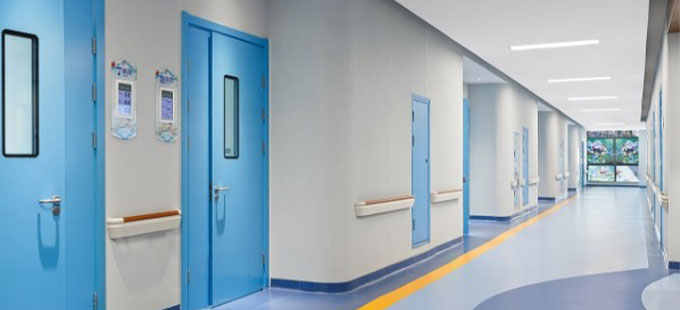
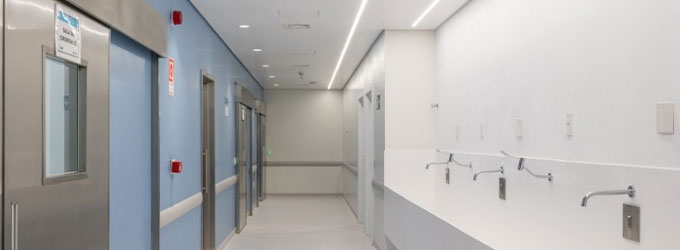
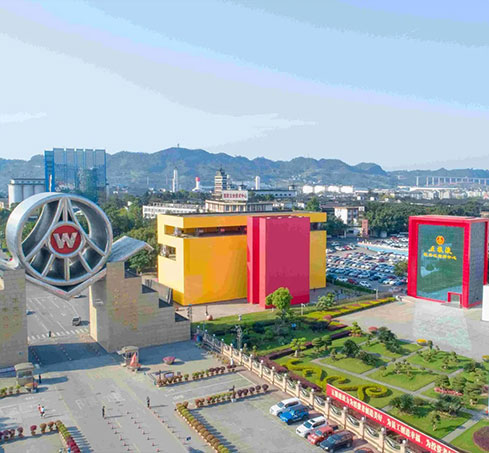
Enquire Now →Real-world deployments of our steel fire rated door solutions across power, transit, commercial, and industrial facilities.





Collaborating with industry leaders across energy, real estate, transit, and infrastructure sectors.


Our engineering team is ready to specify the right steel fire rated door with glass for your power generation or utility facility. Fast response, certified products, global delivery.
Request a Free ConsultationExplore our complete range of certified fire protection products for industrial, commercial, and infrastructure applications.


