Leave Your Message
The global healthcare construction sector is experiencing a paradigm shift towards ultra-safe, smart, and highly resilient infrastructure. At the core of this evolution lies the Fire Rated Steel Door Frame for Operating Rooms and Surgical Corridors. Unlike standard commercial doors, these specialized ingress and egress points must comply with the most stringent international building codes (such as NFPA, EN, and GB standards). The current market demands frames that offer not only 60 to 120 minutes of fire resistance but also flawless integration with hospital environments. The industrial consensus has moved past basic compartmentalization; today’s steel door frames are engineered to support positive pressure environments, preventing the spread of smoke, airborne pathogens, and toxic gases during emergency situations.
Furthermore, the manufacturing of these frames has embraced advanced metallurgy. High-grade galvanized steel and medical-grade stainless steel are utilized to prevent corrosion from harsh hospital-grade disinfectants. The commercial landscape shows a surging demand for customized OEM/ODM solutions, where door frames are pre-prepped for automated operators, magnetic locks, and smart access control systems straight from the factory. This level of precision is no longer a luxury but a fundamental requirement for modern hospital accreditation.
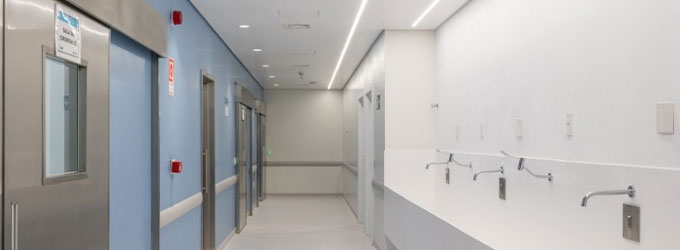
Operating rooms are the most critical zones within any medical facility. The deployment of a Fire Rated Steel Door Frame in an OR setting goes far beyond simple fire protection. These frames are meticulously designed to be flush with the wall, eliminating crevices where bacteria and dust could accumulate. The seamless integration of the frame with airtight door leaves ensures that the positive air pressure required to keep the OR sterile is maintained at all times.
In many scenarios, these frames must also be compatible with lead-lining to provide radiation shielding for hybrid operating rooms equipped with intraoperative imaging devices (like C-arms or MRI). The structural integrity of the steel frame ensures it can bear the immense weight of lead-lined doors without sagging, maintaining a perfect hermetic seal year after year. Additionally, the integration of nano-silica insulated fire-resistant glass allows for safe observation while maintaining both the fire rating and the sterile boundary.
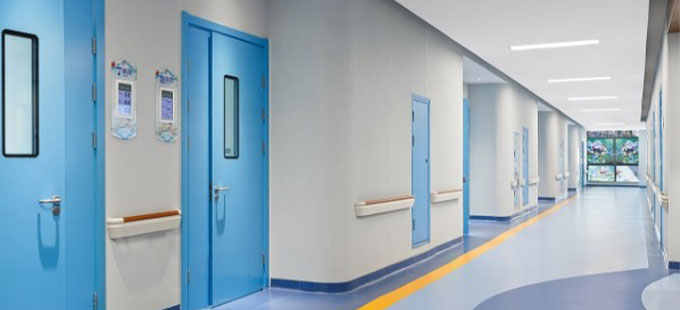
Surgical corridors serve as the vital arteries of a hospital, facilitating the rapid movement of patients, surgical teams, and heavy medical equipment. A Fire Rated Steel Door Frame for Surgical Corridors must withstand relentless physical impact. Stretchers, medical carts, and portable diagnostic machines frequently collide with door frames. Our advanced steel frames are engineered with reinforced strike zones and heavy-duty hinge preparations to absorb and deflect these impacts without compromising the door's operational geometry or fire-stopping capabilities.
In the event of a fire, these corridors become the primary evacuation routes. The fire-rated frames play a pivotal role in compartmentalizing the fire, creating safe havens, and allowing sufficient time for the evacuation of vulnerable, non-ambulatory patients. The integration of intumescent seals within the frame expands upon exposure to extreme heat, sealing the gap between the door and the frame to block lethal smoke—the leading cause of fire-related casualties in healthcare settings.
Dujiangyan Jindun Protective Equipment Co., Ltd. is a professional manufacturer of doors and windows. Our premium brand FORTISAFE, dedicated to the global market, is committed to delivering high-quality products and comprehensive services to customers worldwide.
As a comprehensive enterprise integrating R&D, manufacturing, sales, and after-sales service, we stand out with cutting-edge fully automated production equipment and intelligent management systems. Supported by over 20 patented technologies, we demonstrate strong technical expertise. Our extensive product range includes steel doors, wooden doors, medical doors, fire rolling shutters, fire rated windows, fire rated glass, and specialized doors and windows. Each solution delivers precise and reliable quality to meet your diverse needs.

Our large-scale production capability not only ensures efficiency but also provides our overseas partners with a stable and dependable supply chain.

In-depth communication to understand door/window dimensions, fire rating, design style, installation environment, and special functional requirements.
Our design team creates detailed drawings showcasing appearance, structural details, materials, and installation methods for your approval.
Evaluating technical requirements, selecting appropriate materials and processes, and ensuring product performance and safety standards compliance.
Discussing and finalizing payment methods, including deposit, balance payment, and an agreed-upon payment schedule.
Providing a reasonable delivery schedule based on the production plan and ensuring consistent communication on production progress.
Strict adherence to drawings and specifications. Multiple quality control inspections ensure each door and window is defect-free.
Looking forward, the Fire Rated Steel Door Frame is transitioning from a passive structural component to an active, intelligent node within the smart hospital ecosystem. Driven by AI and Internet of Things (IoT) technologies, next-generation door frames are being designed with embedded sensors that continuously monitor the door’s operational status, hinge alignment, and seal integrity. Predictive maintenance algorithms can alert facility managers if a door frame in a surgical corridor has sustained micro-structural damage from stretcher impacts, ensuring repairs are made before a fire emergency occurs.
Additionally, automated touchless entry systems are becoming standard in Operating Rooms to combat hospital-acquired infections (HAIs). Our frames are engineered with pre-routed channels to seamlessly conceal the wiring for AI-driven facial recognition scanners, wave-to-open sensors, and motorized door operators. In the event of a fire alarm, the building management system can override these operators, automatically closing and locking the fire doors to establish secure fire compartments. This synergy of robust steel manufacturing and advanced AI tech-feel integration represents the pinnacle of modern life-safety engineering.